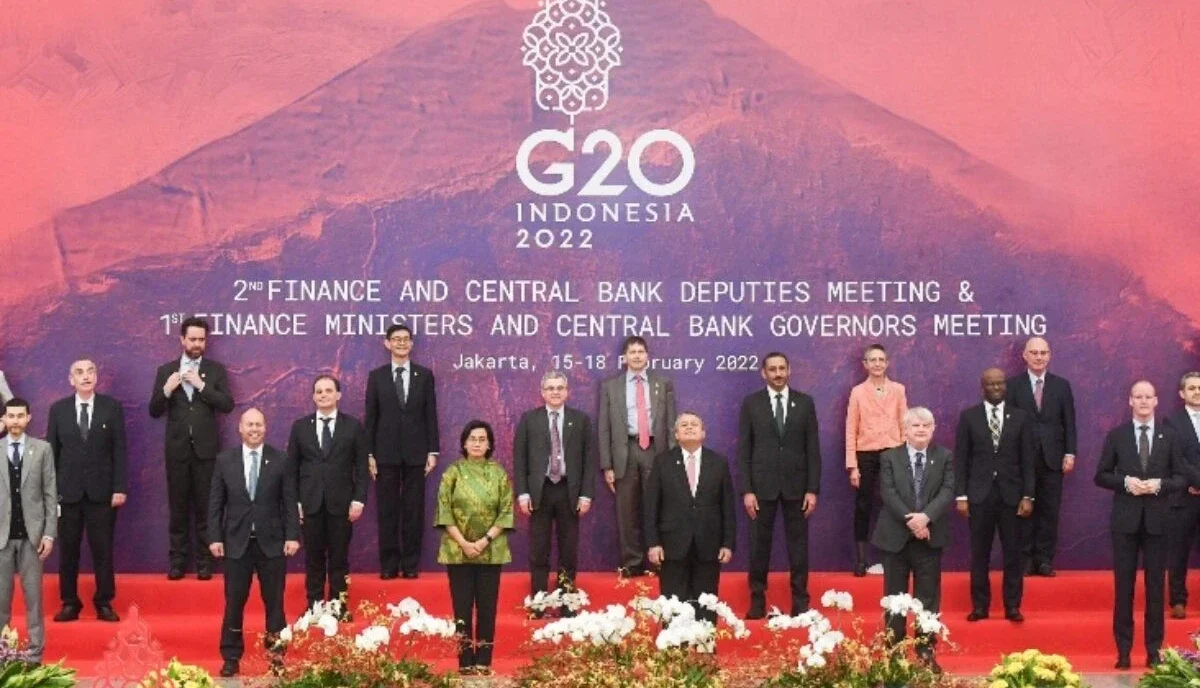
The G20 year in Indonesia was unlike any other. Russia’s war in Europe had divided the G20, and no official communiqués were issued following the ministerial meetings held prior to the summit in mid-November 2022. At one point, it seemed as though the summit would amount to little more than symbolic gestures. However, Indonesian President Joko Widodo chose to confront tensions rather than avoid them.
By listening to all G20 governments, President Widodo recognized that the critical issue lay in the impact of security tensions on the global economy. Security and economic concerns had to be addressed together. Aware that the fate of the international community as a unified entity was at stake, President Widodo pushed G20 leaders, in their final declaration, to “reaffirm our commitment to cooperation,” stressing the necessity of supporting international law and the multilateral system that ensures peace and stability, and affirming that “the use or threat of use of nuclear weapons is unacceptable.” This represented a major achievement.
Although G20 members rejected expelling Russia from the group, they succeeded in uniting all other members around these long-standing principles essential to sustaining a functional international community. The G20 countries also managed to agree on an expanded declaration outlining lines of action to address systemic global challenges.
Multilateralism emerged as a driving force in global political dynamics by highlighting the role of middle powers. This was evident in Indonesia’s leadership and in the decisive language of the declaration mediated by Indian Prime Minister Narendra Modi, who stated that “today’s era must not be an era of war.” The discussions between U.S. President Joe Biden and Chinese President Xi Jinping on the sidelines of the summit introduced a potential new tone in geopolitical relations, underscoring the importance of dialogue as a means of reducing tensions.
Together, these elements clarified the potential role of the G20 as a viable platform for global governance. The question now is whether the Bali Summit can mark a lasting turning point.
More than ever, the G20 Summit in Indonesia revealed what the G20 truly represents—and what it does not.
The G20 is often viewed as a group, but it is more accurately understood as a process. It is not merely a two-day leaders’ summit; it encompasses ministerial meetings, working groups, task forces, sherpa meetings, and engagement group sessions held throughout the year.
The G20 has increasingly embraced multilateralism as a core principle of this diverse group of member states. Each country now seeks “strategic autonomy” in its foreign policy and strongly avoids aligning exclusively with any one side of the geopolitical divide.
This multilateralism represents a positive political dynamic for global governance. It embraces complexity rather than rigid ideological positions and relies on diversity of perspectives while acknowledging the intricacy of global challenges. This opens political space for convergence rather than limiting cooperation to narrow corridors of consensus. This marks a significant departure from the confrontational narratives shaping U.S.–China relations and the polarization caused by the Russia–Europe conflict.
These dynamics have enabled a new vision of the G20 as an “informal hub” rather than a rigid institutional body. Middle powers play a central role in the G20, as demonstrated by Indonesia’s leadership and India’s diplomatic initiative. This perspective highlights that the G20 is not a formal institution, but rather a “network of networks,” characterized by flexibility and openness to external contributions.
Unlike the G7, the G20 is value-neutral in terms of political systems, which facilitates dialogue among countries with diverse cultures, institutions, and political traditions. It is a forum driven more by interests than ideology, where practical policy discussions take precedence over political debate.
Although the G20 is often viewed primarily as an economic forum, it has evolved into a focal point for addressing global systemic challenges that require strategic vision and political action—not merely economic coordination.
G20 summits are frequently criticized for failing to deliver concrete outcomes. While it is true that the G20 performs better during times of crisis than in periods of stability, member states must continue to push one another toward policy implementation, both during and after crises.
Global leadership is a fluid and evolving political process. The informal and interactive nature of the G20 allows governments throughout the year to better understand each other’s positions, perspectives, and constraints. It enables them to shape shared narratives and policy options that evolve through diverse interests and ideas. G20 summits thus provide political leaders with a platform to push the boundaries of what is achievable—within the limits imposed by domestic politics.
It is hoped that a deeper understanding of how the G20 operates will help generate momentum for greater achievements over the next three years under the leadership of India, Brazil, and South Africa.